
The Courage to Cut: Lessons from My First Handwoven Garment
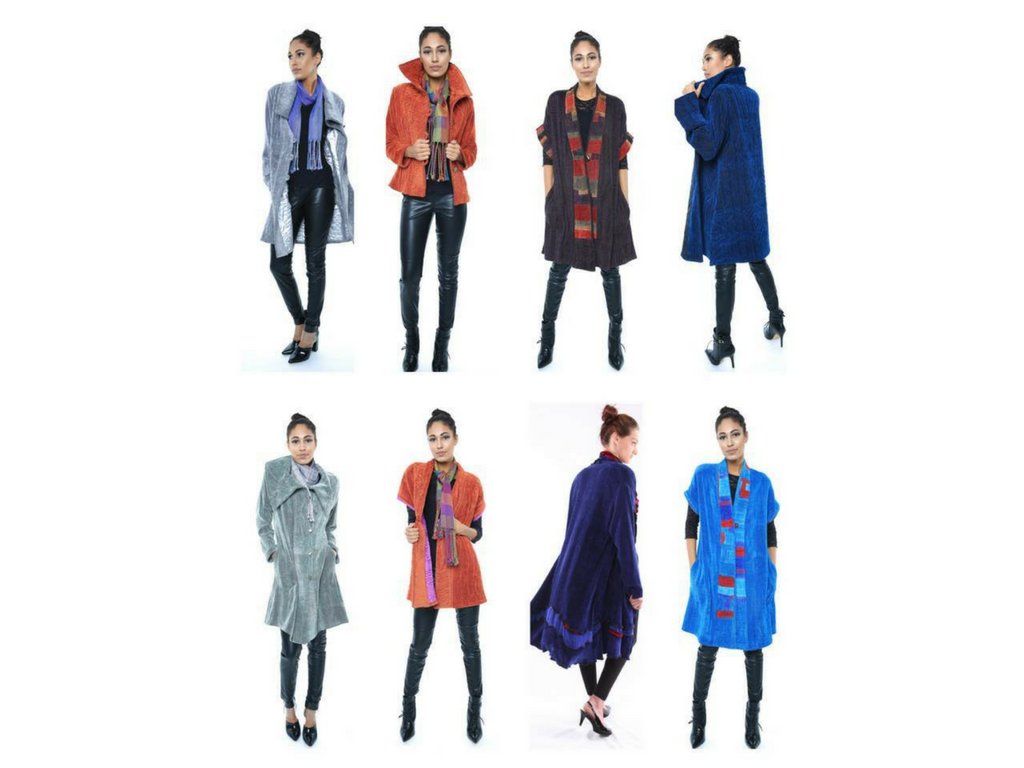
Updated: Aug 11
The first jacket I made did not hang straight.
One sleeve had more confidence than the other. The collar wanted to live its own life. I remember standing in front of the mirror, looking at all those hours of work, and thinking, “Well, at least it has personality.”
That jacket taught me more than a perfect one could have.
It taught me to look longer before cutting. It taught me that fabric has opinions. It taught me that seam ripping is not failure, just part of the conversation. Most of all, it taught me that making clothing from handwoven cloth asks for patience, humor, and a willingness to keep learning.
My textile journey has been full of moments like that. Hopeful ideas. Stubborn fabric. Late-night stitching. Small breakthroughs. The quiet joy that arrives when a flat piece of cloth finally shows what it wanted to become all along.
Now, after years of cutting and sewing handwoven fabric, my work is moving in a new direction. I will continue to apply to juried art fairs in metropolitan cities, because I still love sharing finished garments in that setting. At the same time, I am beginning to plan workshops for other handweavers who want to work more confidently with their own cloth.
Next spring, I will be organizing a workshop in Pacific City, Oregon, where I live. This is the place that inspires me every day, and it feels right to begin here.

A first jacket can be a generous teacher
There is a certain kind of courage in making a first garment, especially from cloth that has already taken so much time to create.
Handwoven fabric is not anonymous yardage pulled from a bolt. It carries decisions made row by row. Fiber, sett, color, beat, pattern, rhythm, tension, washing, and finishing all leave their mark. By the time it reaches the cutting table, it already has a history.
That is what makes the first cut so emotional.
There is always a pause before the scissors open. Even after years of practice, I still feel it. Cutting into handwoven cloth asks for respect, but it also asks for trust. At some point, the fabric cannot remain a beautiful length forever. It wants to move into another life.
My first jacket reminded me that plans are useful, but they are not the whole story. I had an idea in my mind. The fabric had another idea in its fibers. The finished jacket sat somewhere between the two.
The sleeve that seemed so uneven at the time showed me that balance is visual as much as technical. The collar that would not behave taught me to pay closer attention to structure, weight, and how the fabric responds to curves. The whole garment taught me that a mistake is sometimes the first clear signpost.
When a garment does not hang well, it is easy to blame yourself. But cloth, pattern, and body all take part in the outcome. Good sewing grows from learning how those three speak to each other.
Over the years, I have learned to ask different questions:
How does it drape after washing and drying?
Does it want a simple shape or more structure?
Does the pattern overwhelm the person?
Which seams will support the cloth without weighing it down?
Those questions come from experience, and experience often begins with a garment that has “personality.”
Handwoven fabric changes after the loom
Weaving requires planning. A weaver makes choices long before a finished length reaches the table. The warp is measured. Colors are selected. The structure is chosen. The loom is dressed. The cloth grows slowly, pick by pick.
Still, even careful planning does not reveal everything.
The real personality of handwoven fabric often appears after wet finishing. Washing changes the hand. Drying changes the drape. Threads settle into each other. Texture blooms or tightens. A cloth that felt crisp on the loom may soften. A cloth that seemed quiet may develop depth and movement.
That is one reason I love rolling out finished fabric on a cutting table. The table becomes a place of discovery.
I look at the whole length first. I look for areas with the best flow, the best balance, the most pleasing transitions. I notice edges, joins, color shifts, small irregularities, and places where the fabric seems to lead the eye. Sometimes the cloth immediately suggests a jacket. Sometimes it asks to become a vest, a tunic, a wrap, or something with fewer seams and more open space.
A flat piece of fabric often knows more than we do at first glance. The work is learning how to see it.
This is why I do not rush the cutting stage. A woven length may take days, weeks, or longer to create. It deserves more than a quick layout and a hopeful cut.
I like to let the fabric rest in view for a while. I may walk past it several times. I may turn it around, refold it, or place pattern pieces lightly on top without committing. Some decisions become clear only after the cloth has had time to speak.

The cutting table is where listening begins
Cutting and sewing handwoven fabric is different from sewing commercial cloth.
Commercial yardage can be wonderful, but it usually behaves with more predictability. Handwoven fabric has more variation. That variation is part of its beauty. It can also create challenges.
Edges may need special care. Seams may need support. Pattern placement may call for small adjustments. Bulk can appear where several layers meet. A woven pattern may look different once it crosses the shoulder, turns around the body, or meets another seam.
This is where experience matters.
I have learned to slow down and make decisions in the right order. Before I cut, I think about garment shape, grain, stability, seam finish, closure, and movement. I consider how the fabric will live on a body, not just how it looks flat.
Some fabrics want clean, simple lines. Some can carry more detail. Some should not be overworked. The mistake is trying to force every cloth into the same pattern or the same garment idea.
My best work happens when I begin with listening and looking.
That listening is practical, not mysterious. It includes touching the fabric, lifting it, folding it, watching how it falls, and paying attention to how the weave structure behaves. It includes accepting that the idea I had at the loom may change once the cloth is finished.
A fabric may say:
Keep the silhouette simple
Let the color sequence stay uninterrupted
Avoid a collar with too much turn
Use fewer seams
Add structure at the shoulder
Let the hem move freely
Save the smaller pieces for cuffs, pockets, or trim
This is one of the lessons I hope to share more directly in workshops. Many handweavers have beautiful cloth tucked away because cutting feels too risky. I understand that feeling. I have lived with it. I also know the pleasure waiting on the other side.
There is nothing quite like seeing a handwoven length become a garment that moves, warms, fits, and carries the maker’s hand into daily life.
Why teaching feels like the next right step
For years, my focus has been on making finished pieces and presenting them through juried art fairs. I still value that path. Art fairs bring together people who care about fine craft, materials, and the story behind handmade work. They offer a chance to see garments in person, to feel the cloth, and to talk about process.
I plan to continue applying to juried art fairs in metropolitan cities. That part of my work is not going away.
At the same time, I feel a strong pull toward teaching.
There comes a point when knowledge wants to be shared. Not because I have learned everything, but because I have learned enough to help others begin with more confidence. I am always learning. Working with textiles keeps a person humble. Every new fabric has something to teach.
What I can offer is practical experience earned through trial, error, persistence, and joy.
I can speak honestly about what happens when a jacket does not hang straight. I can show how to study cloth before cutting. I can explain why some garment shapes are kinder to handwoven fabric than others. I can help handweavers think through seams, facings, closures, linings, and finishing details before the scissors touch the cloth.
A workshop gives room for that kind of learning.
Books and patterns are useful, but there is a special kind of understanding that happens around a cutting table. People can ask questions in the moment. They can see how fabric behaves when moved by hand. They can compare different cloths and begin to recognize the decisions each one asks for.
Teaching also creates community. Handweavers often work alone for long stretches. A workshop brings those individual experiences into one room. Everyone arrives with different cloth, different questions, and different fears. That mix can be generous. One person’s challenge often becomes another person’s breakthrough.

Pacific City is part of the inspiration
Pacific City, Oregon, is not just where I live. It shapes how I see.
The coast has a way of teaching patience. Light changes quickly. Weather moves through. Colors shift from gray to silver to blue to sand. Textures are everywhere, in grasses, driftwood, water, stone, and sky.
That environment finds its way into my work. Sometimes it appears in color. Sometimes in texture. Sometimes in the quiet space I want a garment to hold.
Planning a workshop here feels natural. The setting supports attention. It offers space to step away from hurry and look closely at cloth. For handweavers, that matters. The work already asks for time. A workshop should honor that pace. Having the beach nearby will be a bonus.
Next spring’s workshop in Pacific City is still in the planning stage. I am working through the details now, including changes to my website so registrations can be made there. As those plans take shape, I will share updates through future blog posts.
The goal is to create a class that feels useful, welcoming, and grounded in real practice. I want participants to leave with more than notes. I want them to leave with a better eye, steadier hands, and a clearer sense of what their fabric can become.
What I hope handweavers will gain
The heart of the workshop will be learning how to approach handwoven cloth as garment material.
That includes technical choices, but it also includes confidence. Many weavers can produce remarkable cloth, then hesitate at the cutting table. That hesitation makes sense. The fabric represents time, skill, and care. A wrong cut feels costly.
Confidence does not come from pretending nothing can go wrong. It comes from knowing what to look for before making a decision.
In a workshop setting, I hope to cover ideas such as:
Reading the fabric after finishing
Choosing garment styles that suit the cloth
Placing pattern pieces thoughtfully
Managing bulk and stability
Planning seams and edges
Using scraps and leftover pieces well
Accepting changes when the cloth suggests a better path
I also hope to make room for the emotional side of the work. We do not often talk about the fear that comes with cutting handmade cloth, but it is real. So is the relief when the first cut is made thoughtfully. So is the delight when the garment begins to take shape.
That emotional arc is part of the craft.
The first jacket with the independent collar taught me that finished work does not need to be flawless to be meaningful. It needs to be observed. It needs to be learned from. Each garment adds to the next one.
If I can help another weaver avoid a few preventable frustrations, I will be glad. If I can help someone take a treasured length of handwoven fabric off the shelf and onto the cutting table, I will be even happier.
Still learning, still making, still beginning
One of the gifts of textile work is that it never really ends.
There is always another fiber to try, another structure to study, another garment shape to test, another finishing method to improve. Even after years of experience, I still find myself surprised by cloth. Sometimes it confirms what I expected. Sometimes it refuses. Sometimes it becomes something better than the plan.
That is why I keep returning to the cutting table with curiosity.
The table holds all parts of the journey at once. The planning from the loom. The surprise of washing. The discipline of pattern work. The bravery of cutting. The patience of sewing. The final moment when the garment hangs, settles, and begins to become itself.
My first jacket did not hang straight, but it started a conversation I am still having.
Now that conversation is expanding. It will continue through my own garments and art fair work. It will also grow through workshops, beginning with the one I am planning for next spring in Pacific City.
I am making changes to my website so registration can happen there when the time comes. Until then, please follow the blog for updates about workshop dates, class details, and future offerings.
There is so much I look forward to sharing: the practical skills, the hard-earned lessons, the mistakes that became teachers, and the joy of watching handwoven fabric become what it was waiting to be.


I’m so excited you have decided to start
Teaching this!! I very much want to learn to make vests and maybe even a jacket with my handwoven fabric. I can’t attend your Spring 2027 Class as PHG is hosting an ANWG conference in 2027. But I hope you decide to
Keep offering these workshops so I can attend one in 2028!! Best regards, Jackie Kraybill in Portland